
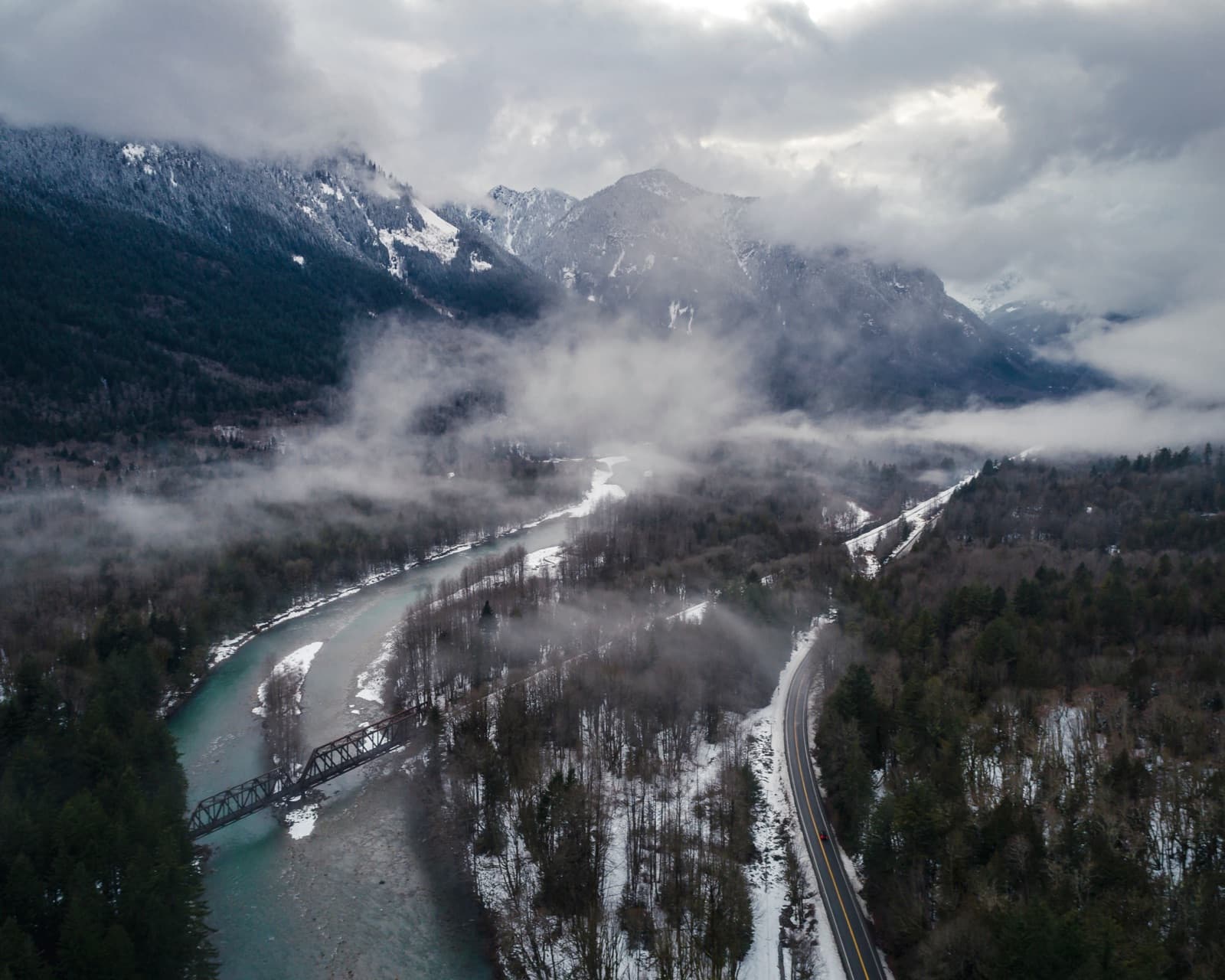
This is the question I get more than almost any other: "I love the idea of living out here, but can I actually commute to work?"
The honest answer is: it depends on where you work, how flexible your schedule is, and what you're willing to trade. Some people make it work beautifully. Others try it for a year and decide it's not for them. I'd rather you know exactly what you're signing up for than be surprised six months in.
I live along the corridor myself, and I've talked to a lot of people who commute from out here in various directions. Here's what I've learned.
The Big Picture
Highway 2 is a two-lane highway for most of the stretch between Sultan and Gold Bar. West of Sultan, it widens to four lanes into Monroe, and from Monroe you have good freeway access — Highway 2 connects to Highway 522 (toward Bothell, Bellevue, and Seattle), and you're a short drive from I-5 via Snohomish or Lake Stevens.
The key thing to understand is that your commute experience is really two separate segments: the stretch on Highway 2 itself (which is scenic and generally moves well outside of peak hours), and the stretch once you hit the freeway system (which is where the Puget Sound traffic reality kicks in).
Drive Times by Community
These are realistic ranges for weekday commutes. The low end is what you'll see leaving early (before 6:30 a.m.) or outside peak hours. The high end is peak traffic, roughly 7:00–9:00 a.m. westbound and 4:00–6:30 p.m. eastbound. Bad weather or incidents on Highway 2 can push times higher.
Monroe
The western gateway to the corridor — easiest commute by far.
Boeing Everett is especially accessible — many Monroe residents work there. Community Transit Route 424 runs from Monroe Park & Ride to downtown Seattle for those who prefer not to drive.
Sultan
The sweet spot for commuters who want space and lower prices.
Sultan offers significantly more affordable homes than areas closer to Boeing Everett, and the drive is manageable. Seattle commutes are doable for people with flexible schedules or who leave early — tough for a rigid 8-to-5.
Gold Bar
A deliberate lifestyle choice — mountain living with a real commute.
Most Gold Bar residents who commute to Seattle work some kind of hybrid schedule — two or three days in the office, the rest remote. The Monroe drive (15–20 min) is the more relevant daily trip for many residents.
Index, Baring & Skykomish
Let me be direct: a daily commute from Index or Skykomish to a Seattle-area office is not realistic for most people. You're looking at 75–100+ minutes each way to Seattle, and 50–70 minutes to Everett.
These communities are home to retirees, remote workers, people in the trades who work locally, and folks who've decided the mountains are worth whatever it takes.
That said, I know people in Index who commute to Everett three days a week and work from home the other two. It works for them. The question is always: what does your specific situation look like?
The Remote Work Factor
This is what has fundamentally changed the Highway 2 corridor in the last few years. The rise of remote and hybrid work has made communities like Gold Bar, Sultan, and even Index viable for people who never would have considered them before.
If you work from home full-time, your commute is zero — and you're living in the mountains with a view of the Cascades instead of a cul-de-sac in Bothell. That's the whole pitch.
If you're hybrid (2–3 days in the office), the math changes dramatically. A 60-minute commute three days a week is a very different proposition than five days a week. Many of the buyers I work with east of Sultan are in exactly this situation — they've negotiated a hybrid schedule and use those office days as their "town days" for errands, groceries, and meetings.
One thing to consider: make sure your remote work situation is stable before committing to a home east of Sultan based on it. If your employer changes the policy and you're suddenly commuting five days a week from Gold Bar, that's a different life.
Public Transit Options
Transit service thins out significantly as you head east, but there are some real options, especially from Monroe.
Community Transit Route 424 (Monroe to Seattle)
This is the commuter route for the corridor. Route 424 runs from Monroe Park & Ride to downtown Seattle on weekdays, with stops in Snohomish along the way. It connects via I-405 and SR-520, giving you a one-seat ride to downtown Seattle in roughly 60–75 minutes depending on traffic. You can read, sleep, or work instead of driving — a lot of corridor commuters swear by this.
The catch: it's a peak-hours-only commuter route. Limited morning departures westbound and afternoon/evening departures eastbound. It doesn't run on weekends.
Community Transit Routes 270/271 (Gold Bar to Everett)
The local bus that runs along Highway 2 from Gold Bar through Sultan, Monroe, and Snohomish to Everett Station. It runs on weekdays and connects you to Everett Station, where you can transfer to Link light rail (now operating to Lynnwood, with future extensions planned), other Community Transit routes, or Sound Transit buses.
This is more of a local-service route — slower, more stops — but it's there if you need it. The Gold Bar Park & Ride at the eastern end is a good option for those coming from up-valley.
Vanpool
Community Transit operates one of the largest vanpool programs in the country. If you can find 5+ people commuting from the Highway 2 corridor to the same general work area, you can form a vanpool. Community Transit provides the van, gas, insurance, and maintenance. You split the monthly cost among riders. It's significantly cheaper than solo commuting, you get HOV lane access, and if there's an emergency, you're guaranteed a ride home.
This works particularly well for Boeing Everett commuters. Check with your employer — many offer subsidized vanpool benefits.
Park & Ride Locations
- Monroe Park & Ride — The main hub. Route 424 to Seattle, Routes 270/271 along Highway 2.
- Snohomish Park & Ride — On Highway 9 near Avenue D. Routes 270/271 and connections south.
- Gold Bar Park & Ride — Eastern terminus for Route 270. Limited but useful if you're east of Gold Bar.
The Winter Question
I'd be leaving something important out if I didn't talk about winter driving. From roughly November through March, Highway 2 east of Sultan can get snow and ice, particularly at higher elevations near Index and beyond. A few things to know:
Highway 2 between Monroe and Gold Bar rarely closes.
It's lower elevation and WSDOT keeps it well maintained. You might hit some frosty mornings, but it's generally passable year-round.
East of Gold Bar, winter conditions get real.
The road gains elevation as you approach Stevens Pass. If you live in Index or Skykomish, you'll want a vehicle with all-wheel drive and good tires, and you'll want to check conditions before heading out on snowy mornings. Our road conditions page pulls live WSDOT data for this reason.
Budget extra time in winter.
On snow days, even if the road is open, traffic moves slower and there may be chain requirements eastbound toward Stevens Pass. If your commute is westbound (toward Monroe and the freeway system), you're generally in good shape once you clear Sultan.
Power outages can happen.
The corridor runs on above-ground power lines through heavily forested areas. Windstorms and heavy snow can knock out power, sometimes for hours and occasionally longer. If you work from home, consider a backup power source (generator or battery system) for your internet and equipment. This is more relevant for homes east of Sultan.
What People Actually Do
After working with a lot of buyers and homeowners along the corridor, here are the most common commute patterns I see:
Monroe residents
Commute everywhere — Everett, Bothell, Bellevue, Seattle. Monroe functions essentially as a suburb with a small-town feel. The commute is comparable to many other Snohomish County communities.
Sultan residents
Tend to work in Everett, at Boeing, or have hybrid schedules that take them to the Eastside or Seattle 2–3 days a week. Sultan is the sweet spot for people who want more space and lower prices but still need reasonable access to jobs.
Gold Bar residents
Mostly remote workers, retirees, trades workers, or hybrid commuters who've made a deliberate lifestyle choice. They're comfortable with the drive because they get to live surrounded by mountains, rivers, and trails.
Index, Baring & Skykomish residents
Almost entirely remote workers, retirees, or people who work locally (ski industry, forestry, trades, small businesses). These are not commuter communities — they're mountain communities that happen to be 60–90 minutes from the metro area.
Tips That Make It Better
Leave early
This is the single biggest thing. A 6:00 a.m. departure from Sultan to Seattle might take 50 minutes. A 7:30 a.m. departure might take 80. The corridor rewards early risers.
Batch your in-office days
If you're hybrid, stack your office days together (like Tuesday–Thursday) so you're only making the commute on consecutive days. Use those days for everything that requires being in town — meetings, groceries, appointments.
Use the Park & Ride
Driving to Monroe Park & Ride and catching the 424 to Seattle saves you the stress of downtown parking and I-5/520 traffic. You might not save time, but you'll save your sanity.
Check conditions before you leave
Bookmark our road conditions page or the WSDOT app. A two-minute check on a winter morning can save you from surprises.
Keep your gas tank full
Especially in winter. There are limited gas stations east of Sultan, and if Highway 2 gets backed up, you don't want to be running on empty.
Find your podcast or audiobook
If you're driving 45–75 minutes, that's 90–150 minutes of uninterrupted listening time per day. A lot of corridor commuters will tell you their drive time became some of their favorite time once they found the right content.
The Tradeoff
I'm not going to pretend that commuting from Gold Bar to Seattle is the same as commuting from Lynnwood. It's not. It's longer, it's less predictable in winter, and there are fewer transit options.
But here's what you get in return: you come home to mountains, rivers, wildlife, and quiet. Your kids grow up riding bikes on safe roads. You can afford acreage instead of a postage stamp. On a summer evening, you're sitting by the Skykomish River instead of a freeway on-ramp.
Every single person I've worked with who lives east of Monroe made that tradeoff consciously, and most of them wouldn't trade it back. The key is going in with your eyes open, which is the whole point of this guide.
Helpful Links
Community Transit
Route maps, schedules, and trip planning for Routes 424, 270/271, and vanpool.
WSDOT Real-Time Travel Times
See current drive times for major corridors including Highway 2.
Highway 2 Road Conditions
Live Stevens Pass status, highway alerts, and camera feeds.
Community Transit Vanpool
Information on starting or joining a vanpool from Snohomish County.
RideshareOnline.com
Find carpool partners for your specific commute route.