
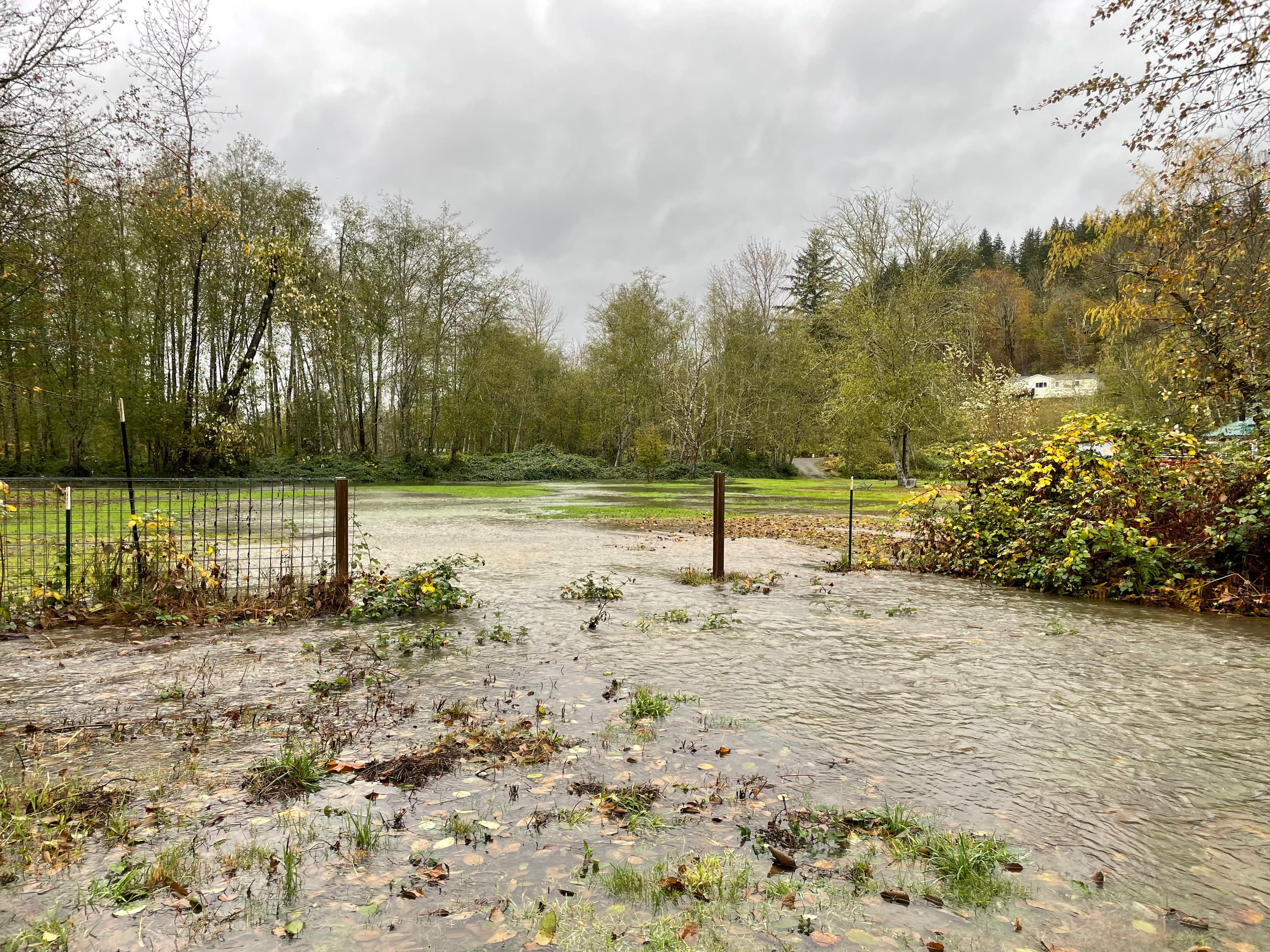
If you're looking at property along the Highway 2 corridor — from Monroe out to Skykomish — flood zones are going to come up. They come up in almost every transaction I handle out here, and yet they're one of the most misunderstood parts of buying rural property in the mountains.
So I want to go deep on this. Not just “check the flood map before you buy” (though you should), but the whole picture: what flood zones actually mean out here, how they affect your financing, what flood insurance actually costs, and what you can do to protect yourself as a buyer or seller. This is the stuff I walk clients through all the time, and it's worth getting right.
Why Flood Risk Is Real on the Highway 2 Corridor
The Skykomish River defines this corridor. It runs alongside Highway 2 from Monroe all the way east through Sultan, Gold Bar, Index, and Skykomish, and it is a powerful, dynamic river. So are its tributaries — the Sultan River, the North Fork Skykomish, the South Fork, the Wallace River, and dozens of smaller creeks that drain steep terrain on both sides of the valley.
The Pacific Northwest's flood season runs roughly October through April. That's when we get extended heavy rain events combined with saturated ground — and sometimes a warm rain-on-snow event that accelerates snowmelt dramatically. Flood conditions can develop when rainfall exceeds around four inches in a 24-hour period paired with already-saturated ground, and that type of event happens here more often than people expect.
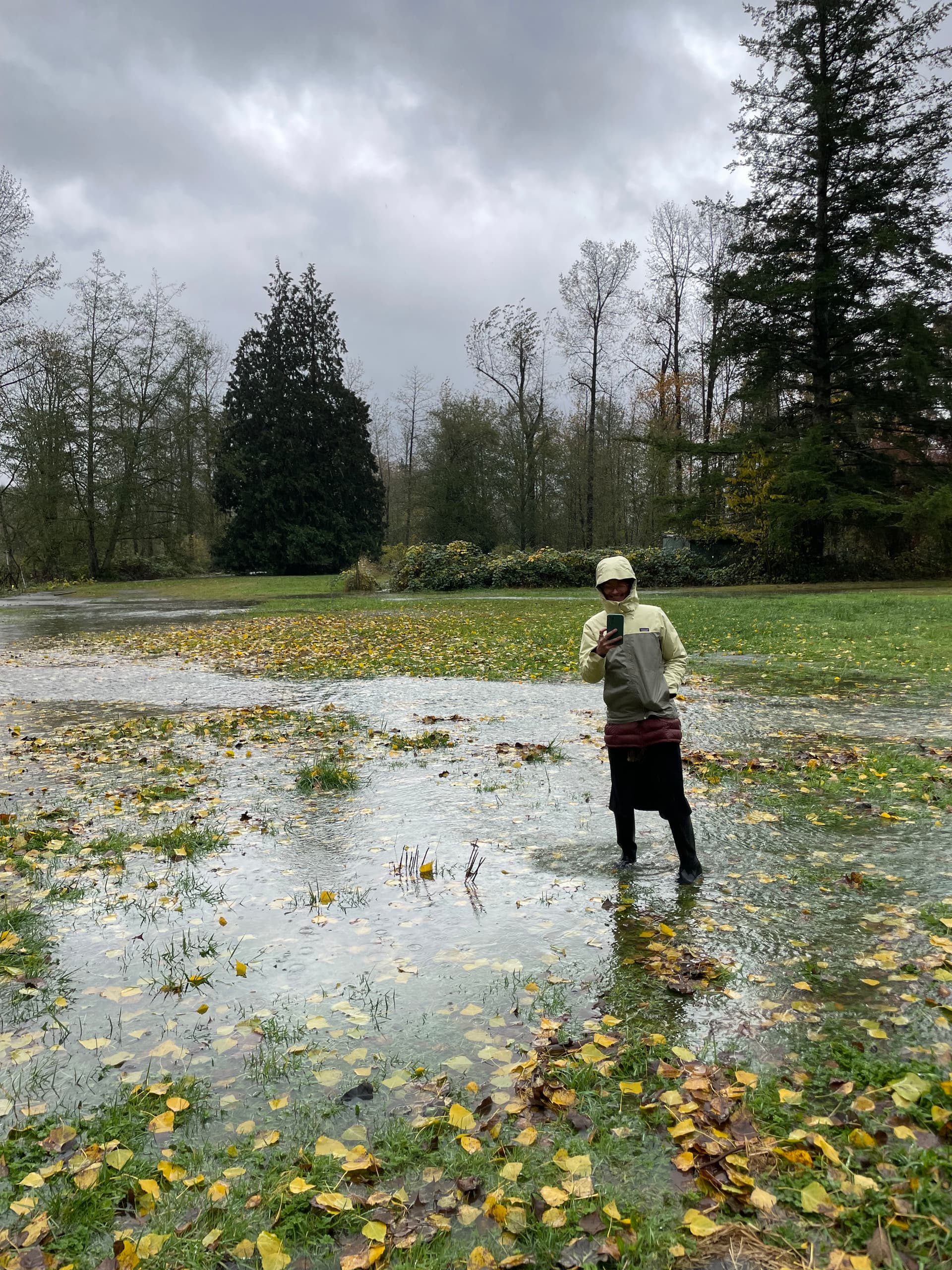
December 2025 Flooding
Historic flooding hit Snohomish County hard, with 800+ people under evacuation orders in unincorporated areas alone, 41+ rescues by Snohomish Regional Fire, and a federal emergency declaration enabling FEMA assistance. The section of Highway 2 between Skykomish and Leavenworth sustained damage extensive enough that officials described it as needing to be “almost entirely rebuilt.” Governor Ferguson requested $182.3 million in FEMA assistance for infrastructure repairs statewide.
That's not a freak occurrence. This valley floods. The question for property buyers isn't whether flooding happens — it's whether a specific property is in the path of it, and how to protect yourself financially if it is.
How Flood Zones Work: The FEMA Map System
FEMA administers the National Flood Insurance Program (NFIP) and creates Flood Insurance Rate Maps (FIRMs) that designate flood risk zones for virtually every parcel in the country. These maps are what lenders, insurance agents, and county planners all use to assess risk and set requirements.
Snohomish County updated its flood maps significantly in 2020. The county partnered with FEMA to produce new Digital Flood Insurance Rate Maps (DFIRMs), incorporating new detailed studies of the Skykomish River, the Sultan River, the North Fork Skykomish, and portions of the Snohomish River. The 2020 maps changed Base Flood Elevations (BFEs) in many areas due to updated hydrology, refined topography, and changed conditions in the watershed.
If you're buying on the corridor, the 2020 DFIRMs are the maps in effect. Here's how to read the zones you'll encounter:
Zone AE — High Risk (Special Flood Hazard Area)
This is the big one to know. Zone AE is a detailed-study area with a 1% annual chance of flooding — the so-called “100-year flood” — and FEMA has established specific Base Flood Elevations (BFEs) for it. If a property has a federally-backed mortgage and is in Zone AE, flood insurance is required. Period. No exceptions.
Along the Skykomish corridor, significant stretches of riverfront and low-lying valley floor fall into Zone AE. Properties close to the Skykomish River, Sultan River, and their tributaries are most commonly affected.
Zone A — High Risk (Approximate Study)
Similar to AE — 1% annual chance of flooding — but without detailed engineering studies establishing BFEs. You'll see this in areas where FEMA has done approximate rather than detailed mapping. Still requires flood insurance with a federally-backed mortgage.
Zone X (Shaded) — Moderate Risk
A 0.2% annual chance of flooding (the “500-year floodplain”). Flood insurance is not required here, but your lender may recommend it and it's worth considering seriously. Plenty of flood claims come from properties in shaded X zones.
Zone X (Unshaded) — Lower Risk
Outside the 500-year floodplain. Flood insurance not required. That said, “lower risk” is not the same as “no risk” — flooding can and does occur outside mapped zones, especially as weather patterns shift. About 25% of all flood claims nationwide come from properties outside high-risk areas.
Zone AE / Zone A
High Risk — 1% annual flood chance
Flood insurance required with federally-backed mortgage
Zone X (Shaded)
Moderate Risk — 0.2% annual flood chance
Insurance not required but recommended
Zone X (Unshaded)
Lower Risk — outside 500-year floodplain
Insurance not required — still 25% of claims come from here
Check Your Property
Use FEMA's Flood Map Service Center or call Snohomish County PDS at 425-388-3311.
A Word About the Maps Themselves
The flood maps are a snapshot in time based on statistical modeling. They're useful tools, but they have real limitations out here:
Rivers move
The Skykomish, like most dynamic mountain rivers, migrates its channel over time. A property that sits comfortably outside the mapped floodplain today might be more exposed after a major flood event reshapes the channel. Snohomish County has been studying channel migration on the Lower Skykomish specifically because of this dynamic.
Maps lag reality
Even with the 2020 updates, flood maps can take years to catch up to changing conditions. The 2025 flooding may eventually trigger map revisions.
Your parcel is not your neighbor's parcel
Flood zone boundaries can split a property. I've seen lots where the front half is Zone AE and the back half is Zone X. The location of the structure on the parcel is what matters for insurance and lending purposes.
How Flood Zone Affects Financing
This is where flood zones have an immediate, practical impact on the transaction. If you're financing with a conventional loan, FHA, VA, or USDA loan — any federally-backed mortgage — and the structure sits in a Special Flood Hazard Area (Zone A or AE), your lender is legally required to mandate flood insurance. It's not optional, and they'll verify it before closing.
The flood determination comes early
Lenders order a flood zone determination as part of the loan process, typically right after the purchase agreement is signed. If the determination comes back as SFHA, you'll need flood insurance in place before closing.
It affects your monthly payment
Flood insurance is an additional premium on top of your homeowner's insurance, typically paid through your escrow account monthly. It's a real number — budgeting for it matters.
It can affect what you can build
Properties in Zone AE have floodplain development regulations that restrict certain types of construction and require new structures to be built at or above the Base Flood Elevation. This matters if you're buying vacant land or a property you plan to significantly improve.
It's a disclosure item
In Washington, sellers are required to disclose known material defects including flood zone status. But you shouldn't rely on the seller's disclosure alone — verify it yourself with the FEMA map and a flood determination.
What Flood Insurance Actually Costs
This is probably the most common question I get, and the honest answer is: it varies quite a bit depending on the property. But here's a realistic picture.
NFIP (National Flood Insurance Program)
The NFIP is the federal program administered by FEMA. It's available to any property owner in a participating community — and Snohomish County, Monroe, Sultan, and Index all participate.
$250k
Max building coverage
$100k
Max contents coverage
~$1,064
National avg. annual premium
Washington State properties in high-risk Zone AE often run $1,500 or higher. Properties with favorable elevation relative to the Base Flood Elevation can see lower rates; properties with lower elevation or more exposure can run significantly more.
Risk Rating 2.0: FEMA shifted to a new pricing model in 2021 that moved away from pricing primarily based on flood zone and elevation to a more property-specific model that considers distance to water, flood frequency, replacement cost, and other individual factors. About two-thirds of NFIP policyholders saw rate increases as a result.
The CRS Discount — A Real Benefit in Our Towns
Several communities along the corridor participate in FEMA's Community Rating System (CRS), which rewards proactive floodplain management with direct discounts on NFIP flood insurance premiums.
| Community | CRS Class | SFHA Discount |
|---|---|---|
| City of Monroe | Class 5 | 25% discount |
| City of Sultan | Class 6 | 20% discount |
| Town of Index | Class 7 | 15% discount |
| Snohomish County (unincorporated) | Class 6 | 20% discount |
That means if you're buying in Monroe and your flood insurance would otherwise be $2,000 a year, you're paying $1,500 instead — a $500 annual savings — simply because the city has invested in strong floodplain management.
For properties in Gold Bar, Startup, Baring, and Skykomish (unincorporated Snohomish County areas), the 20% county CRS discount applies.
Private Flood Insurance
The private flood insurance market has grown substantially and is now a genuine alternative worth comparing. Private carriers may offer:
- Lower premiums for certain property types and risk profiles (sometimes dramatically lower)
- Higher coverage limits than NFIP's $250k/$100k caps — important if your home's replacement value exceeds $250,000
- Additional coverages that NFIP doesn't provide, like additional living expenses if you're displaced
- More flexible underwriting
That said, private insurance isn't always cheaper, and it comes with less certainty around renewal — a private carrier can decide to exit a market. For most buyers financing a purchase, NFIP is the standard, but it's worth getting both quotes side by side.
The Snohomish County average flood insurance premium across all policies runs around $855 per year, but that blends high-risk Zone AE policies with lower-risk properties. For a Zone AE home on the corridor, budget meaningfully more than that when running your numbers.
Elevation Certificates: A Hidden Variable
An Elevation Certificate (EC) is a survey document that records the elevation of a structure's lowest floor relative to the Base Flood Elevation established by FEMA. It's prepared by a licensed surveyor and can have a significant impact on your NFIP flood insurance premium.
Under Risk Rating 2.0, elevation certificates are technically optional — FEMA can rate a property without one, using its own elevation data. But in practice, if your home sits above the BFE, a current elevation certificate can document that and potentially lower your premium. If the FEMA-modeled elevation data is less favorable than the actual survey elevation, an EC can make a meaningful difference.
If you're buying a property in Zone AE:
- Ask the seller if they have an existing elevation certificate. Many do, especially if the property has had flood insurance before.
- Check the date. An EC can go stale if the community's flood maps have been updated or if the property has been modified.
- If there isn't one and the property sits close to the BFE, consider ordering one. The cost runs a few hundred dollars for a licensed survey. It's often worth it.
How Flood Zone Affects Property Value
This is a real question and deserves a straight answer: yes, flood zone designation can affect marketability and value, but it's not a simple penalty.
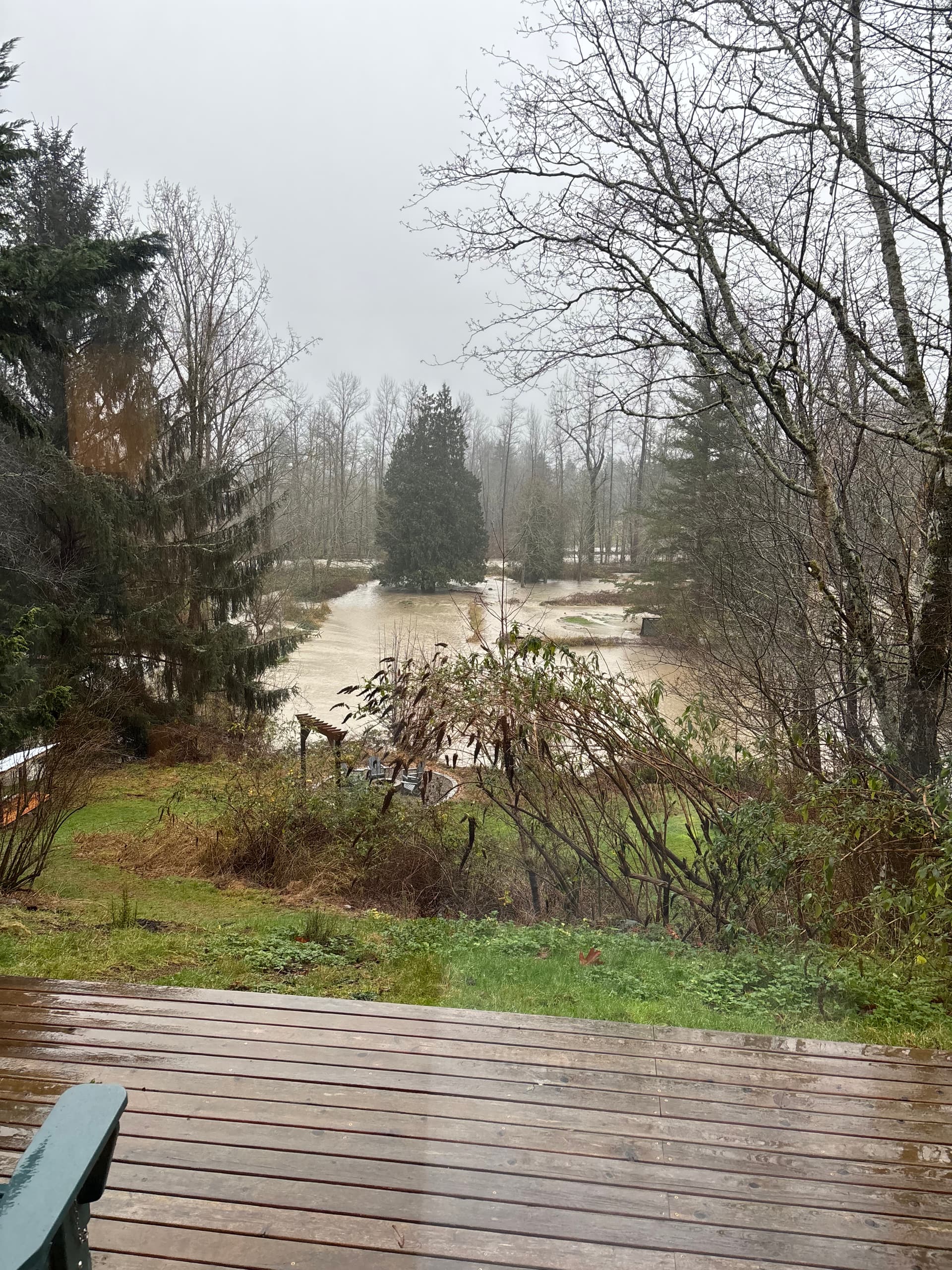
Properties in Zone AE aren't unsellable
I've closed plenty of flood zone transactions on this corridor. A well-elevated home with a current elevation certificate, modest flood insurance premiums, and mitigation features (like elevated utilities) is a very different conversation than an older structure sitting below the BFE.
The flood zone is priced in — partially
Buyers factor in flood insurance cost as part of their monthly payment. A higher insurance cost often softens the price a buyer is willing to pay, especially in a buyer's market.
Repetitive loss is a flag
FEMA tracks properties that have filed multiple flood insurance claims. A property with a repetitive loss designation comes with elevated scrutiny from lenders, higher insurance premiums, and more skeptical buyers.
Flood zone changes can cut both ways
When FEMA updates maps, some properties get added to high-risk zones (usually a negative for value and cost), while others get removed (a positive). The 2020 Snohomish County DFIRM updates shifted boundaries in several areas.
For Buyers: What to Do With All of This
Here's the practical checklist I'd walk any buyer through when looking at properties along the corridor:
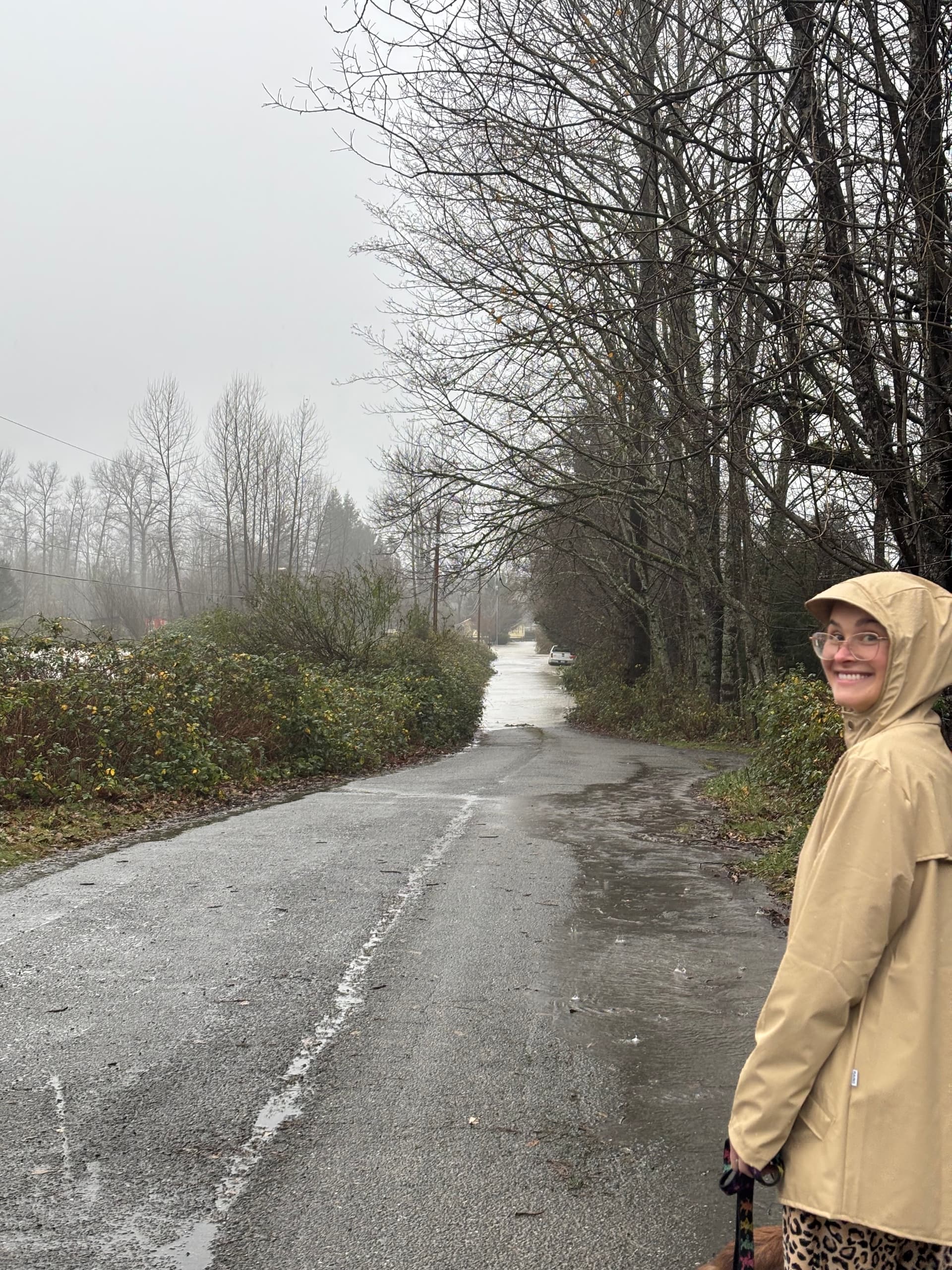
Check the flood zone early
Don't wait until you're in escrow. FEMA's Flood Map Service Center (msc.fema.gov) lets you search by address for free. Look up any property you're seriously considering before you make an offer.
Understand the BFE if you're in Zone AE
Get the Base Flood Elevation from the FIRM panel or the county, and compare it to the elevation of the lowest floor of the structure. This is the single biggest driver of flood insurance cost for AE properties.
Ask about flood insurance history
In Washington, sellers are required to disclose known flood history. Ask if there have been any flood insurance claims. Ask if the property has flood insurance currently and what it costs. Ask for any existing elevation certificates.
Budget real numbers
Get an actual flood insurance quote, not an estimate. Your insurance agent can get you a quote within 24–48 hours. Factor the annual premium into your monthly payment calculations.
Think about the long game
Flood risk isn't static. Climate patterns are shifting precipitation and snowmelt dynamics across the Pacific Northwest. Maps get updated. Think not just about today's map but about the trajectory of the watershed.
Understand what you're buying
River valley property along the Skykomish is beautiful. It's also in a river valley. The land is flat and fertile because of thousands of years of floodplain deposition. Eyes wide open is the right posture.
For Sellers: How to Get Ahead of It
If you're selling a property on the corridor that has any flood zone exposure, my strong advice is to get organized before you list.
Pull your current elevation certificate
If your home sits at or above the BFE, an EC in the listing package builds buyer confidence and speeds the transaction.
Know your CRS discount
Being able to tell a buyer “this property qualifies for the 20% Snohomish County CRS discount on flood insurance” is a concrete benefit worth communicating.
Have your flood insurance renewal in hand
The actual premium your current insurer charges is often more reassuring than hypothetical estimates.
Price with awareness
Flood zone isn't automatically a dealbreaker, but buyers will factor insurance cost into their offers. Pricing that accounts for this will attract more serious offers.
The Bottom Line
Flood zones along the Highway 2 corridor are real, they affect a meaningful number of properties, and they matter to the transaction. But they're not the end of the story. The key is understanding exactly what you're buying, building an accurate picture of insurance cost and mitigation options, and making a clear-eyed decision based on real numbers — not fear of the flood zone designation itself.
If you're looking at a specific property and want to talk through what I know about flood history, zone designations, or the practical insurance landscape in that area, reach out. This is the market I work every day, and I'd rather spend 20 minutes helping you understand the risk landscape upfront than have you discover it in the middle of escrow.
Helpful Resources
FEMA Flood Map Service Center
Search flood zone designations by property address for free. The definitive source for current Flood Insurance Rate Maps.
Snohomish County Planning & Development Services
Floodplain development regulations, permits, and flood zone verification. Call 425-388-3311 for property-specific questions.
FloodSmart.gov — NFIP Consumer Resource
Official NFIP resource for understanding flood insurance options, getting quotes, and finding participating agents.
Highway 2 Buyer's Guide
The complete guide to buying property along Highway 2 — wells, septic, zoning, access roads, financing, and more.
Well Water & Septic Systems Guide
What you need to know before buying a home on well and septic along the Highway 2 corridor.
Land Buyer's Guide
Buying vacant land? Covers perc testing, zoning, legal access, critical areas, and financing for Highway 2 parcels.