

Once you get past Sultan heading east on Highway 2, most homes aren't connected to city water or sewer. That means private wells and septic systems — and if you're coming from a home in the suburbs where you've never thought twice about where your water comes from or where it goes, this can feel like a big unknown.
It doesn't have to be. Thousands of families along the corridor live on well and septic every day without giving it much thought. But buying a home on these systems is a little different than buying one on city utilities, and there are a few things worth understanding before you make an offer. That's what this guide is for.
I'm not a septic engineer or a well driller — I'm a real estate broker who works this corridor every day and has walked through these conversations with a lot of buyers. Think of this as the practical overview I wish someone had handed me the first time I helped a client buy a cabin on well and septic.
What's the Situation Along Highway 2?
The water and sewer picture changes as you head east from Monroe:
- Monroe is mostly on city water and sewer, though some properties on the outskirts are on well and septic.
- Sultan has a small city water and sewer system that covers the town core. Homes outside town limits — and there are many — are typically on private well and septic.
- Startup and Gold Bar are almost entirely on private well and septic. Gold Bar has a very small community water system, but the majority of residential properties rely on individual wells.
- Baring, Index, and Skykomish are on private well and septic with very few exceptions. Some of the smaller communities like Index have basic water systems for the town core, but if you're looking at anything outside the immediate town center, plan on well and septic.
- Mount Index Riversites (the gated community near Index) has its own community water system, which is one of its selling points.
The rule of thumb: the farther east you go, the more likely you're dealing with a private well and a septic system. This isn't a negative — it's just how rural mountain living works, and it's been working fine out here for a long time.
1Well Water
How Wells Work (The Short Version)
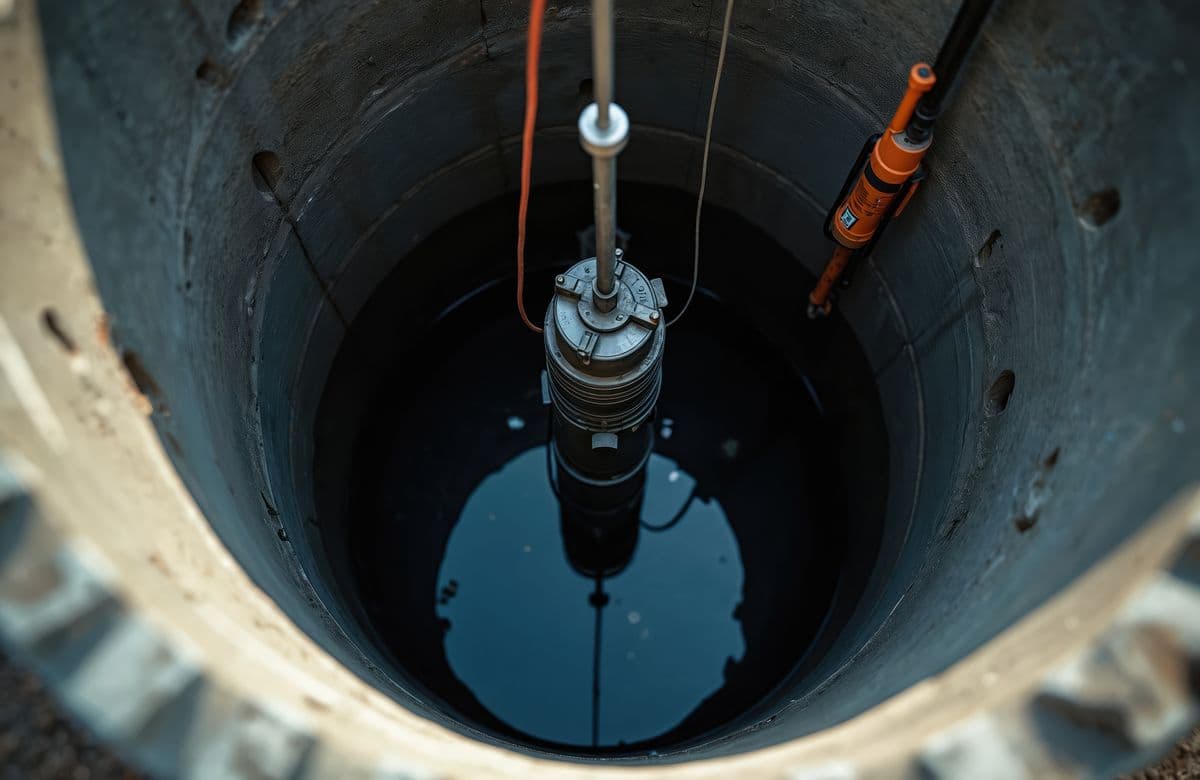
A well is a hole drilled into the ground that taps into an underground aquifer — a layer of rock or gravel that holds water. A pump brings that water up and into your home. Most wells along the Highway 2 corridor are drilled wells, typically ranging from 50 to 300+ feet deep depending on the geology at that particular spot.
The key things that matter about a well are: Does it produce enough water? Is the water safe to drink? And is the well itself in good physical condition?
Water Quality Along the Corridor
Most well water along Highway 2 is good quality — clean, cold mountain water from glacial aquifers. But there are a few things specific to this area that buyers should know about:
Arsenic — The Most Important Thing to Know
Arsenic is naturally present in Snohomish County groundwater. It's not contamination from pollution — it's geological. The bedrock in eastern Snohomish County naturally contains arsenic, and it can leach into groundwater at varying levels. The Snohomish County Health Department requires arsenic testing for all new wells, and if any level is detected (even below the safe limit), a disclosure statement gets recorded on the property title.
Most wells test well below the EPA maximum contaminant level of 10 parts per billion (ppb). But levels can vary over time — a well that tested fine five years ago could test differently today. If you're buying a home with an existing well, I always recommend a fresh water test as part of your due diligence, regardless of what previous tests showed.
If arsenic is detected above 10 ppb but below 50 ppb, it can be treated with a point-of-use filter at the kitchen sink. Levels between 50 and 150 ppb require a whole-house treatment system designed by a professional engineer. These systems work well — they just add cost and ongoing maintenance to the equation.
Hard water is common in many areas along the corridor. It's not a health concern, but it can leave mineral deposits on fixtures and isn't great for appliances. Many homeowners install water softeners.
Iron and manganese can sometimes be present, causing reddish or dark staining on fixtures and laundry. Treatable with filtration, but worth knowing about before you buy.
What to Check When Buying a Home on Well Water
Get a current water test
Don't rely on tests from the seller's records unless they're very recent. A comprehensive water test costs roughly $150–$400 depending on what's tested. At minimum, test for:
- Coliform bacteria — indicates contamination from surface water or sewage
- Nitrates and nitrites — can indicate septic or agricultural runoff
- Arsenic — the big one for Snohomish County
- Lead
- pH level
- Iron and manganese
Check the well log
Every well drilled in Washington has a well log filed with the Department of Ecology. This document shows when the well was drilled, how deep it is, what the driller found at each depth, and the flow rate when it was completed. I can help you pull this during the due diligence period.
Ask about flow rate
Flow rate is measured in gallons per minute (GPM). For a typical household, you want at least 3–5 GPM for comfortable daily use. FHA loans specifically require a minimum continuous flow of 3 GPM. If a well produces less than this, it can complicate financing and may need supplemental storage (a holding tank) to bridge peak usage periods.
Check the pump and pressure system
Well pumps don't last forever — typical lifespan is 10–15 years. Ask when the pump was last replaced. The pressure tank in the house should also be in good condition. Replacing a well pump runs roughly $1,500–$3,000 depending on well depth.
Ask about shared wells
Some properties share a well with one or more neighbors. This is common and perfectly fine, but you'll want to see the recorded shared well agreement and easement. VA and FHA loans have specific requirements for shared wells, including a formal well-sharing agreement and a permanent easement for access. If these documents don't exist, they'll need to be created before closing.
Loan Requirements for Well Water
This matters a lot if you're using financing:
Conventional Loans
The most flexible. Generally don't require water testing unless the appraiser flags an issue. But your lender may still require it — ask early.
FHA Loans
Require that water meets local health authority standards. A water test by a disinterested third party is required. The well must produce a minimum of 3 GPM continuous flow.
VA Loans
Require a water test by a disinterested third party (not the buyer, seller, or their agents). Tests are valid for 90 days. For shared wells, the VA requires a formal sharing agreement and permanent easement.
USDA Loans
Also require water testing. Results are valid for 150 days.
Key takeaway: If you're financing with anything other than a conventional loan, budget time for well testing early in the process. A failed test doesn't mean the deal is dead — it just means treatment or retesting may be needed, and that takes time.
2Septic Systems
How Septic Works (The Short Version)
A septic system handles wastewater from your home in two stages. First, everything from your drains flows into an underground tank (usually 1,000–1,500 gallons for a typical home). In the tank, solids settle to the bottom and natural bacteria break them down. Second, the liquid effluent flows out of the tank into a drain field — a network of perforated pipes buried in gravel trenches where the water slowly filters through the soil and returns to the groundwater.
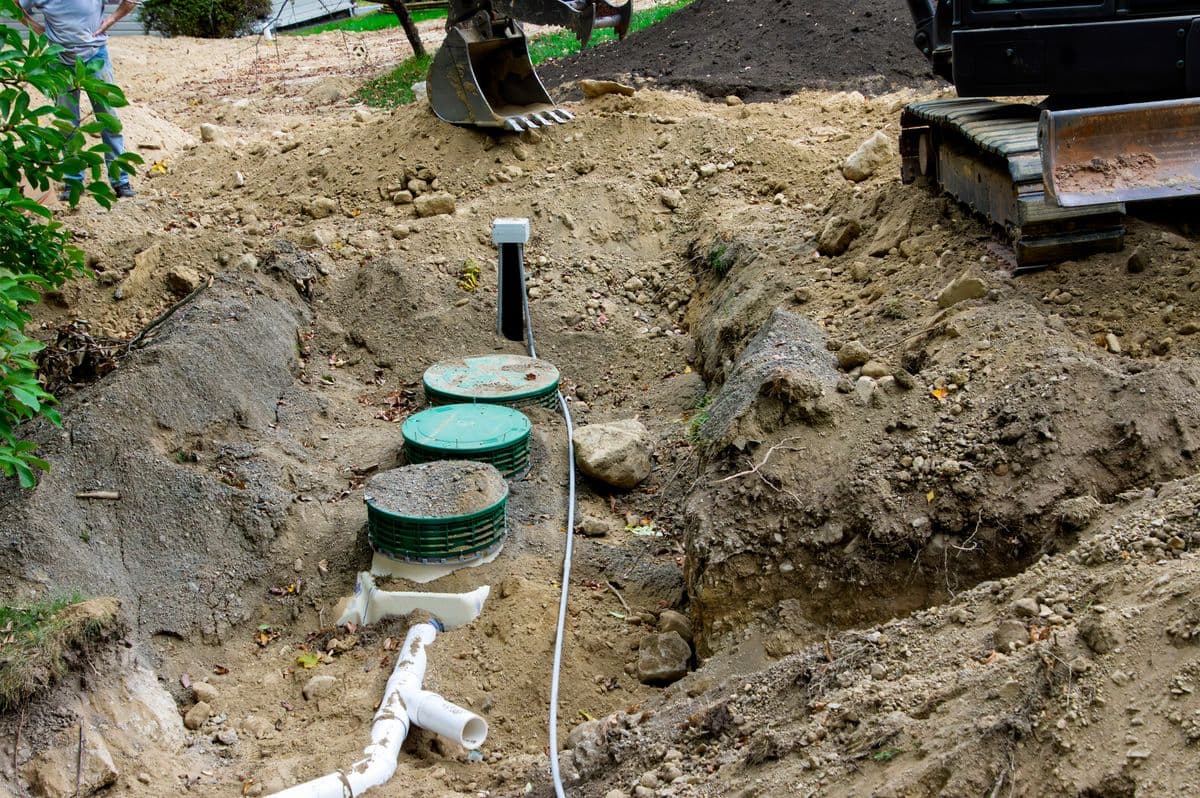
There are two main types you'll see along Highway 2:
Gravity Systems
The simplest and most common. Wastewater flows from the house to the tank to the drain field using gravity alone. No pumps, no electricity needed, fewer things to break. These are the workhorses of rural septic.
Pressure Distribution
Use a pump to evenly distribute effluent across the drain field. Common in hilly or rocky areas along the corridor. They work well but have more components (pump, alarm, control panel) that need periodic attention.
You'll also occasionally encounter mound systems (where the drain field is built up above grade because the soil or water table doesn't allow for a traditional in-ground field) and sand filter systems. These are less common but not unusual in mountain terrain. On some older properties — especially those built before the mid-1970s — you may also find a cesspool instead of a modern septic system, which is a different situation entirely and one worth understanding before you make an offer.
What to Check When Buying a Home on Septic
Get the as-built drawing
Every permitted septic system in Snohomish County has an as-built record on file with the Snohomish County Health Department. This drawing shows exactly where the tank, drain field, and all components are located on the property. This is an essential document — it tells you what type of system is installed, how old it is, and where you can and can't build, park, or plant trees.
Get a septic inspection
Here's an important nuance: Snohomish County does not currently require a septic inspection at the time of property transfer. But your lender might, and I recommend one regardless. A proper inspection includes pumping the tank and a visual assessment of the tank, baffles, filter, and drain field. An Operation and Maintenance (O&M) inspection by a licensed provider typically costs $300–$600.
Signs of potential problems during an inspection include:
- Cracks or damage to the tank
- Effluent level higher than normal (can indicate drain field issues)
- Standing water or unusually green grass over the drain field
- Sewage odor near the tank or drain field area
Check the age
Septic systems have a typical lifespan of 20–30 years, though well-maintained systems can last longer. If a system is getting old, factor potential replacement costs into your offer. A new conventional gravity system in this area typically runs $10,000–$20,000 installed. Alternative systems (pressure, mound, sand filter) can run $15,000–$30,000+.
Ask about the reserve area
When a septic system is designed, the county typically requires a designated reserve area — a spot on the property where a future drain field could be installed if the current one ever fails. Make sure the reserve area exists and hasn't been built on, paved, or otherwise compromised.
Check inspection history
Washington state law requires homeowners to inspect their septic system on a regular schedule: every 3 years for gravity systems, annually for all other types. Ask the seller for maintenance records showing pumping and inspection history. A well-documented maintenance history is a good sign.
Living with Septic: The Basics
Once you own a home on septic, here's the practical reality:
Have it pumped every 3–5 years
This removes accumulated solids from the tank. It's the single most important maintenance task. Pumping costs roughly $300–$600 in this area.
Be mindful of what goes down the drain
No grease, no "flushable" wipes (they're not actually flushable for septic), no harsh chemicals, no paint. Basically: water, soap, human waste, and toilet paper. That's it.
Don't drive or park on the drain field
This compresses the soil and can damage the pipes. Don't plant trees near it either — roots will find and destroy drain field pipes.
Know where your system is
Keep a copy of the as-built drawing and know where your tank lid, drain field, and reserve area are located. You'll need this information when it's time for pumping or if any issues arise.
Install risers if you don't have them
Risers bring the tank access point to ground level so you don't have to dig down to the tank every time it needs service. Snohomish County's Savvy Septic Program even offers rebates for riser installation.
3What This Means for Your Offer
When you're making an offer on a property with well and septic, a few things are worth building into your approach:
Build in time for testing
Water testing and septic inspection should happen during the inspection contingency period. Make sure your timeline allows for it — water tests can take a week or more to get results back from the lab.
Negotiate based on findings
If the water test comes back with elevated arsenic that needs treatment, or the septic inspection reveals the system is aging and may need replacement in the near future, these are legitimate negotiation points. I help my clients think through the real cost implications so we can make informed requests.
Factor ongoing costs into your budget
On city water and sewer, you pay a monthly utility bill and don't think about it. On well and septic, you don't have that monthly bill — but you do need to budget for periodic expenses: water testing ($150–$400 every few years), septic pumping ($300–$600 every 3–5 years), and eventually pump replacement or septic system work. Heating costs are another significant line item on rural properties, especially those running on propane or electric baseboard heat.
Don't let it scare you off. I want to be honest about what's involved, but I also don't want this guide to give you the wrong impression. Well water and septic systems are normal, proven infrastructure for rural homes. Tens of thousands of families in Snohomish County live on them. They're less complicated than they sound once you understand the basics.
Helpful Resources
Snohomish County Health Department — Septic
Permits, as-built records, maintenance requirements, and finding licensed septic professionals.
Snohomish County Health Department — Water Testing
Contaminant levels, testing recommendations, and how to find a certified lab.
OnlineRME — Septic Records Search
Search for septic system records by property address or parcel number.
Department of Ecology — Well Report Viewer
Search for well logs (driller's reports) for any property in Washington.
Snohomish County Savvy Septic Program
Free online workshop about septic care, plus rebates up to $500 for inspections, riser installation, pumping, and minor repairs.
Land Buyer's Guide
Buying vacant land? This guide covers perc testing, zoning, legal access, critical areas, utilities, and financing for Highway 2 parcels.