
If you've ever tried to sell a rural property using photos that were clearly shot for a suburban listing, you already know something is off — even if you can't quite put your finger on what. The house looks fine, but the land feels like an afterthought. The setting that makes your property worth what it's worth barely shows up at all.
That disconnect is one of the most common — and most costly — mistakes I see when rural properties hit the market along the Highway 2 corridor. And it's almost always about presentation.
Here's what I've learned about what it actually takes to show rural land, cabins, and mountain properties the way they deserve to be shown.
The Land Is the Listing
With a city condo or a neighborhood home, the structure carries most of the story. Square footage, finishes, layout — buyers can picture themselves there pretty quickly from interior photos alone.
Rural property is different. Your five acres of timber, your creek frontage, your mountain views, your garden space — these aren't just nice extras. They're often the whole reason someone is buying. A buyer looking for a cabin near Index isn't just looking for four walls and a roof. They want to understand what it feels like to stand on that property on a Saturday morning.
Which means your photography has to do something most real estate photography doesn't: it has to sell the land at least as hard as it sells the structure. Often harder.
Drone Footage Changes Everything
I'll be honest: I didn't fully appreciate how much aerial footage matters until I started flying my own drone over properties on the corridor. The difference is dramatic.
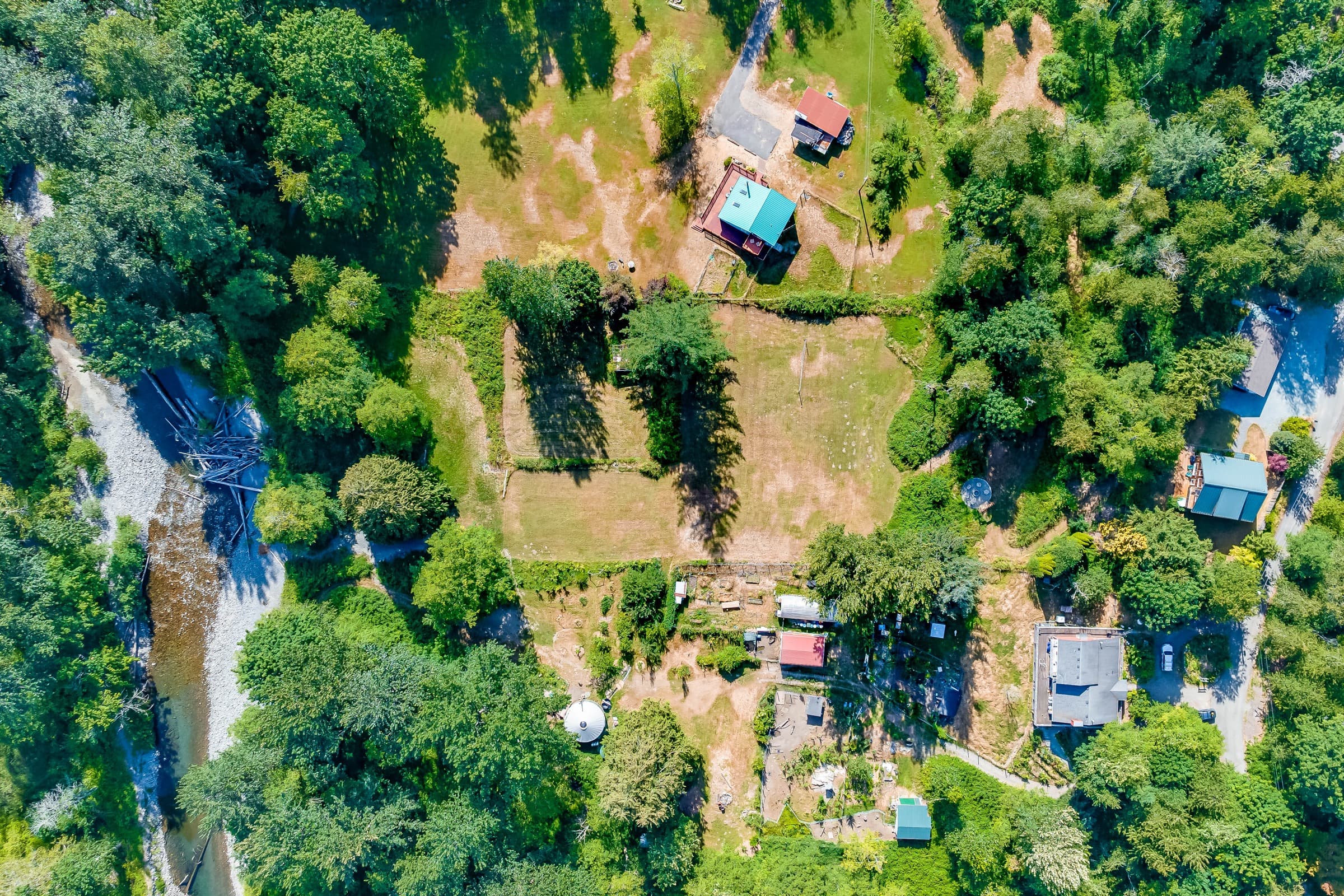
From the ground, a two-acre cleared meadow is hard to convey in photos. You can stand in the middle of it and take a wide shot, but you're still only showing a fraction of it, and you lose the spatial context entirely — how it relates to the timber behind it, how the road runs along one edge, how far the views extend to the ridgeline.
From 200 feet up, all of that becomes obvious in a single frame. Buyers can immediately understand the topography, the usable acreage, the privacy, the relationship between the home and the land. That spatial understanding is exactly what they need to feel confident about a property they may have only visited once.
Key takeaway: For any rural property with more than a couple of acres, drone coverage isn't optional. It's the one tool that translates land the way ground-level photography never quite can.
Timing and Light Are Everything Out Here
The Highway 2 corridor is a gorgeous place to photograph — but it's also an unforgiving one. The mountains can be spectacular on a clear day and completely invisible in low cloud. The river can look like polished glass in morning light and muddy brown under overcast skies. The old-growth trees along Index Town Walls can feel ancient and dramatic, or just dark and heavy, depending entirely on when you shoot.
This is one of the real arguments for professional photography — not just better equipment, but better judgment about when to shoot. A photographer who knows the corridor and respects the light will reschedule a session if the forecast looks flat. They'll plan the shoot around golden hour rather than fitting it into a convenient mid-afternoon window. That discipline shows up directly in the final images.
Season matters too. A property that backs up to a river looks completely different in May runoff versus August low water. A south-facing meadow in July versus November. You're not misrepresenting anything by choosing the most favorable season to photograph — every seller does this — but it's worth thinking about intentionally rather than just booking a photographer whenever you're ready to list.
What to Actually Document
Beyond the obvious — house exterior, interior rooms, the view — rural listings have a whole additional layer of features worth documenting carefully. These are the things buyers from outside the area often ask about, and the things that can make or break a sale:
The well head and pressure tank
Buyers want to see that these exist and look well-maintained. If you're unfamiliar with wells and septic systems on the corridor, that guide covers what buyers look for.
The septic access lid and drain field location
Yes, really — rural buyers think about this.
Outbuildings
Shop, barn, storage, even a simple lean-to — these are selling points for rural buyers.
The driveway and road approach
Condition and accessibility matter, especially for properties with seasonal access considerations.
Water features
Creek crossings, ponds, springs — anything that moves. Know that some water features may intersect with flood zone designations.
Boundary lines and corners
Show buyers what they're buying. If you're selling vacant land along Highway 2, this is especially critical.
Rural lifestyle infrastructure
Firewood storage, garden space, Starlink installation — any infrastructure that signals this property is set up for rural life.
None of these replace beautiful photography of the home itself. But buyers who are serious about rural property are going to want answers to practical questions, and photos that preemptively answer them build confidence.
Staging Looks Different Out Here
The suburban version of staging — neutral paint, decluttered rooms, a bowl of lemons on the kitchen counter — is only part of the picture for a rural property. Out here, the staging extends outside.
Before your photographer shows up, walk your entire property with a critical eye. Mow or weed-eat any grass that's gotten shaggy along the driveway. Move equipment and vehicles out of the frame. Stack the firewood neatly. Pull the tarps off anything that can be uncovered. If you have a deck, clean it and add a couple of chairs — buyers want to imagine themselves sitting on it, not just walking past it.
The goal isn't to make the property look like something it isn't. It's to show it at its genuine best. Rural buyers are realistic — they expect work, they expect character, they expect some rough edges. But they also want to see that the seller has cared for the place. A little attention to presentation signals a lot about how the property has been maintained overall.
The Written Presentation Matters Too
Photos get buyers through the door — or in the digital age, get them to click through to schedule a showing. But the listing description is what helps them understand what they're actually looking at.
For rural properties specifically, the MLS remarks should include practical information that most urban listings never need to address: water source and GPM if tested, septic type and age, heating system and fuel, any easements or access considerations, road maintenance situation (private road? County-maintained? Seasonal?). These aren't just legal disclosures — they're selling points when handled well.
A 10-acre property with a producing well, a recently pumped septic, and year-round road access is a fundamentally different asset than the same acreage with an unknown well and a driveway that washes out every spring. If yours is the former, say so clearly.
A Note on Virtual Tours
360-degree virtual tours have become standard for a lot of residential real estate, but they're less universally useful for rural properties — particularly the land portion. A Matterport scan of the interior is genuinely helpful for buyers who can't easily visit, but it doesn't do much for conveying the feel of the property outside.
What I've found works better for rural listings is a short, well-edited video walkthrough — ideally combining aerial drone footage with a ground-level walk through the key features of the property. Something in the two-to-four minute range that someone can watch and come away feeling like they understand the property. That kind of content does a lot of work for out-of-area buyers researching from Seattle before deciding to make the drive out.
The Bottom Line
Great photography and presentation don't guarantee a faster sale or a higher price — there are too many other variables for any single factor to guarantee anything. But poor presentation absolutely costs you. Rural buyers are often making bigger lifestyle decisions than urban buyers, and they're doing a lot of research before they even set foot on a property. Your listing photos and description are doing that research with them, or they're failing to.
The properties along the Highway 2 corridor are genuinely special. The goal of good presentation is simply to make sure potential buyers understand that before they ever leave their driveway.
Thinking about selling? If you're considering listing and want to talk through what preparation and presentation might look like for your specific property, I'm happy to walk through it — no pressure, just a conversation. Check out our seller's guide for more on the listing process.