
Most people's first move when they're curious about a property's value is to pull it up on Zillow or Redfin. It's fast, it's free, and it gives you a number that feels authoritative. In a lot of neighborhoods, it's actually pretty reasonable — not perfect, but in the right zip code.
Then you get out here, and things get strange.
I've had sellers pull up their Zestimate or Redfin estimate expecting a ballpark and find it's off by $80,000 or $100,000 — sometimes higher, occasionally lower. That's not a rounding error. That's the difference between a decision that works and one that doesn't. And in my experience, it happens consistently enough on rural and acreage properties along Highway 2 that it's worth explaining why.
What these estimates actually are
A Zestimate or Redfin estimate isn't an appraisal. It's not the result of anyone walking your property or making judgment calls about what a buyer would actually pay. Both are algorithms — formulas that look at recent nearby sales, pull square footage and basic lot data, and extrapolate a value. That system works reasonably well when the houses around you are similar: comparable size, comparable lots, built around the same time by similar builders. Suburban subdivisions are basically designed for it.
Rural property is the opposite of that.
Why the numbers break down along Highway 2
Drive any stretch of Highway 2 and you'll find a 1,400-square-foot home on a small lot sitting next to a 2,200-square-foot place on three acres with a shop. Down the road there's a cabin on the river, then a manufactured home on five acres, then a custom build with mountain views. The algorithm has to treat these as comparable because they're geographically close. But no actual buyer would. They're completely different products, and the formula consistently struggles to account for that.
Land value: the biggest gap
The biggest gap I see is with land value. Zillow prices homes primarily on square footage — the land is almost an afterthought in the math. Out here, that's backwards. On a lot of properties along the corridor, the acreage is half the value or more. And not just any acreage: usable, flat, buildable land is worth significantly more than steep hillside or wetland. The algorithm sees lot size. Buyers care deeply about what the lot actually is, and no automated tool captures that distinction reliably.
Shops, outbuildings, and invisible value
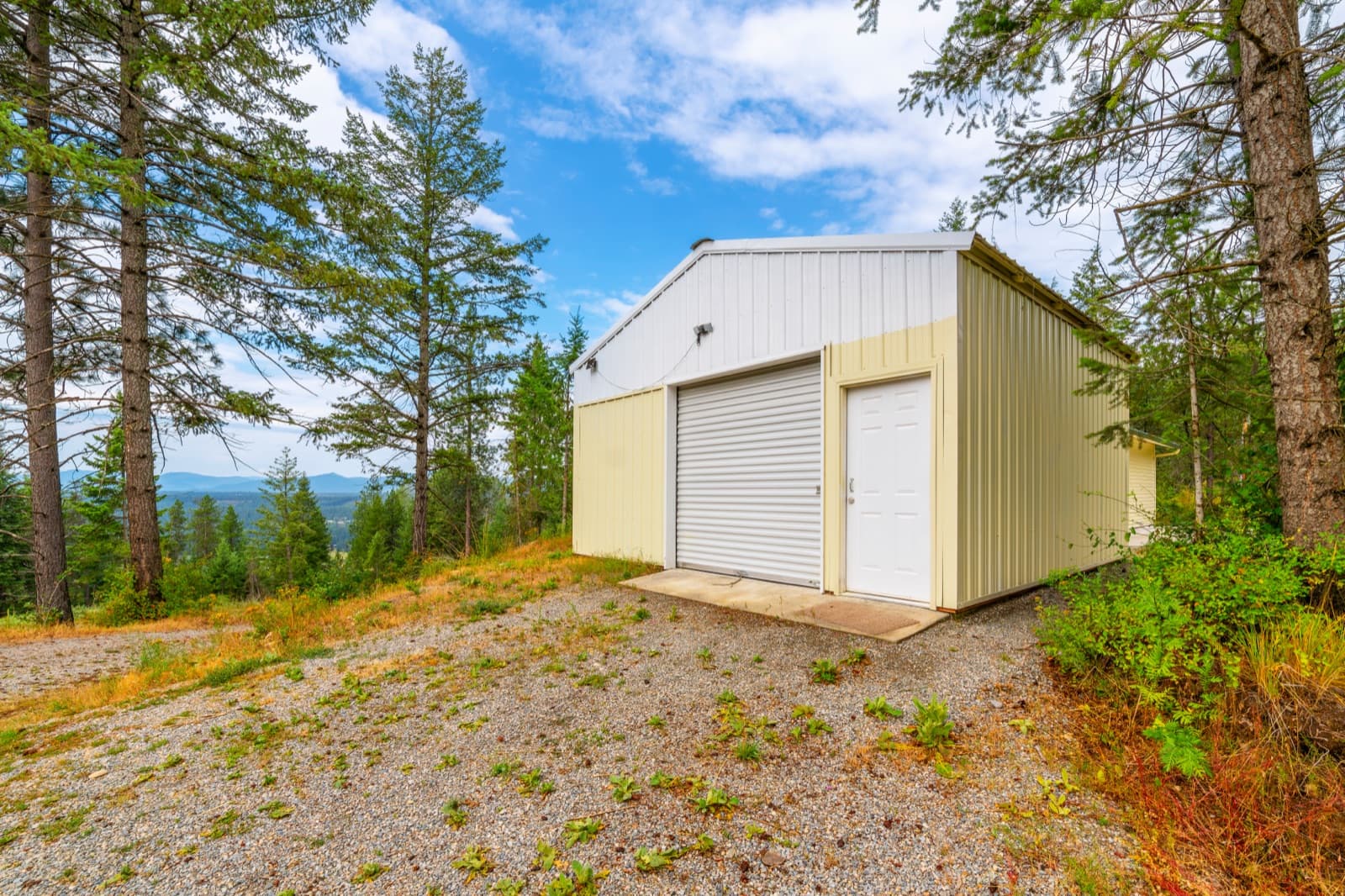
Shops and outbuildings are nearly invisible to these tools as well. A 1,000-square-foot heated shop or a large barn can add real, meaningful value to a rural property — sometimes it's the primary reason a buyer is interested. But Zillow essentially ignores it. The house square footage goes in, a number comes out, and the shop might as well not exist.
Privacy, setting, and what can't be coded
Then there's the stuff that genuinely can't be coded: privacy, setting, the feeling of being tucked into the trees versus fronting a busy road. Two houses with identical square footage and lot sizes can have very different values depending on whether one backs to forest and the other has three neighbors visible from the kitchen window. Buyers pay for quiet and privacy in a very real way. Algorithms don't have a variable for it.
Condition, updates, and thin data
Condition and updates are another consistent problem. An automated tool can't walk through your house. It doesn't know if your kitchen was renovated last year or last century. It averages everything in the area, which means updated homes tend to get undervalued and tired fixers often come in high. And finally, the data pool itself is thin out here — in a place like Index or Baring, there might be two or three genuinely comparable sales in a year. When the algorithm can't find local comps, it reaches farther for "similar" properties that often aren't similar at all.
When automated estimates are still useful
None of this means these tools are useless. For a rough order of magnitude — are we talking $400,000 or $800,000 — they're fine. The problem is when people treat them as something more precise than that and make decisions accordingly. Pricing a rural property to sell, or deciding what to offer on one, based on an automated estimate is a real gamble.
What actually works for rural pricing
What actually works here is what automated tools can't replicate: pulling comps that genuinely match the property — same acreage range, same access situation, similar improvements — and combining that with deep knowledge of what buyers in this specific market tend to value. A shop matters more to some buyer pools than others. River access prices differently than mountain views. These things are knowable, but they come from experience with the market, not from a formula applied from a server somewhere.
If your Zillow or Redfin estimate looks off to you, you're probably not misreading it. Rural property is just genuinely harder to value remotely, and the gap between the algorithm's guess and what a buyer will actually pay can be substantial in either direction. If you want a more grounded number — whether you're thinking about selling, buying, or just curious — running real comps takes maybe 20 minutes and gives you something you can actually rely on.
Josh White is a real estate broker with Horizon Real Estate, specializing in homes, land, and rural properties along the Highway 2 corridor. josh@highway2realestate.com